 Nederlands
1885
First edition
From a modest torchlight procession in 1885 to an internationally recognized cultural heritage. The rich history of the Rozenberg Light Parade.
Cultural heritage
The Rozenberg Illuminated Parade is Belgium's oldest illuminated procession and is officially recognized as intangible cultural heritage.
What began as a simple torchlight procession at the annual fair grew into an impressive spectacle of illuminated floats, music, and community spirit.
First edition
Editions
Categories
Passion
Timeline
1885
The birth
On September 28, 1885, the De Schepersvrienden association organized a torchlight procession on the Rozenberg for the first time during the annual fair in Mol-Centrum. A tradition was born.
1919
After world war 1
After the horrors of the First World War, the procession revived with renewed vigor.
1929
A new committee
A separate committee is being established for the organization of Ginderbuiten.
2026
142st edition
The 142nd edition will take place on September 12, 2026.
Since prehistoric times, humans have been fascinated by fire. Fire provided not only warmth but also the light essential for life within the dark caves and caverns that served as their homes. Consequently, early humans revered this inexplicable natural phenomenon as an unattainable deity.
This cult of light and fire soon became the ideal way to add an extra dimension to festive occasions through the use of torches, flambeaux, and the like.
Through ingenuity, humans discovered techniques to make flames burn longer and brighter. Torches gave way to oil lamps. Gas lighting was impressive in its own right, and candles remained highly practical tools for emergencies. Yet, it was the incandescent light bulb that gave the light source its most magical quality.
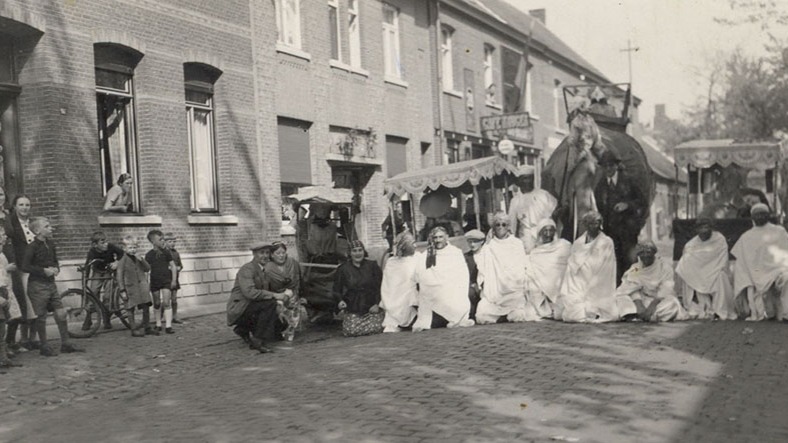
In the 19th century, it was customary to kick off fairs and festivals on the eve of the event with a torchlight procession and festive music. This gave rise to traditions that evolved into magical light spectacles—events eagerly anticipated year after year.
On Saturday, September 26, 1885, the local fair at Rozenberg was enlivened by a torchlight procession for the first time. The event was organized by members of the local association "De Schepersvrienden" (The Shepherds' Friends).
"De Schepersvrienden" operated under the inspiring leadership of their founder and chairman, Peter Ludovicus Van Dingenen—known as "De Scheper" (The Shepherd). Born on November 30, 1855, he was the illegitimate son of Maria Anna Van Dingenen; he lived at Rozenberg 71 and worked as a stoker at the spinning mill. Their regular haunt was the "’t Bergsken" tavern on Rozenberg (at the corner of Bergstraat and Rozenberg).
From "’t Bergsken," the Schepersvrienden would set out across Rozenberg, accompanied by torches and a few enthusiastic musicians.
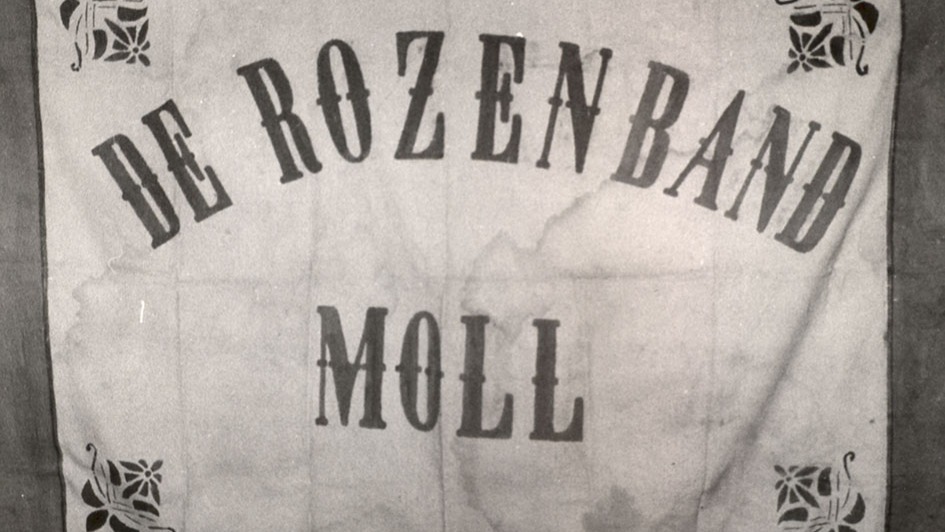
From 1892 onwards, the *Schepersvrienden* received assistance in organizing the fair and the procession from the choir section of the *Jacht Sint Hubert* society (itself established in 1835), the "De Vossepijp" archery club, and the "De Rozelaer" cycling club. Following a period of serious disarray in the organization of the procession, *De Rozenband* was founded in 1913; this umbrella organization was tasked with arranging the procession and fair in collaboration with *De Schepersvrienden* and the local innkeepers' association.
After the First World War, in 1919, the procession route was extended to include part of the Ginderbuiten district (reaching as far as the "Kleine Majoor"), with both the start and finish located at the convent (the "nuns' school") on De Rozenberg.
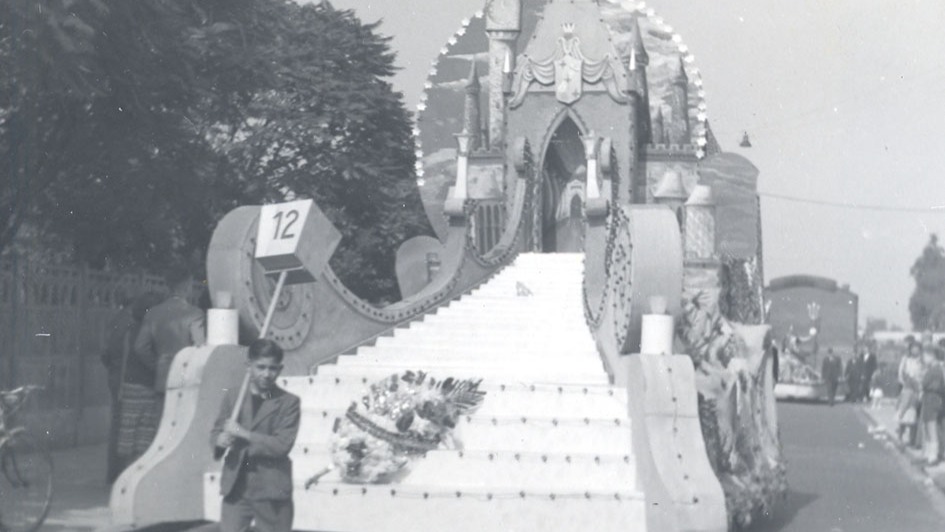
In 1929, the “Over den Barreel” festivities committee organized its own fair, followed by its own illuminated parade in 1930. The Ginderbuiten Illuminated Parade was born.
A reconciliation took place in 1934, resulting in the organization of a single, joint parade for that one occasion.
After the Second World War—specifically in 1949—the “Komiteit Ginderbuiten Vooruit” applied to join the Rozenberg Illuminated Parade. However, the members rejected this request at a general meeting of the Rozenband. The rift became permanent, and in 1950, the fairs were also definitively separated.
Yet our illuminated parade withstood the test of time, growing into an internationally renowned event—unique of its kind and unrivaled: THE ROZENBERG ILLUMINATED PARADE.
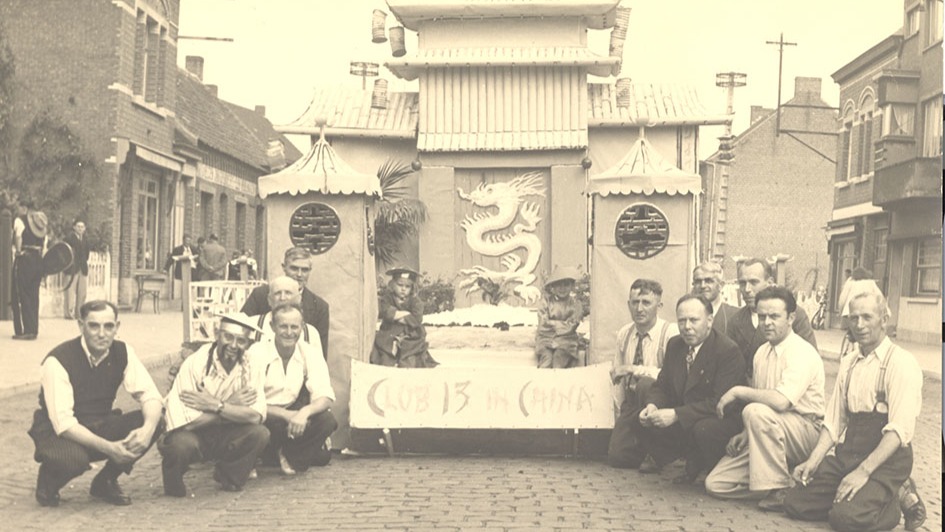
From the very beginning, the torchlight procession was an overwhelming success. Local residents, community groups, and musicians would gather every year for this festive parade of lights.
Torches eventually gave way to hollowed-out beetroots containing tallow candles, which were later replaced by the small paper lanterns familiar from our childhoods. Local young people enthusiastically joined in, devising all sorts of creative costumes in a spirit of friendly rivalry. Neighborhood groups formed and began creating group displays featuring small, illuminated structures lit by candles from within.
The procession gained momentum, growing year by year and becoming widely known. Local weekly newspapers would announce the upcoming attractions in advance, and visitor numbers rose steadily. Every September, people traveled from far and wide to the Rozenberg to witness this breathtaking parade of lights.
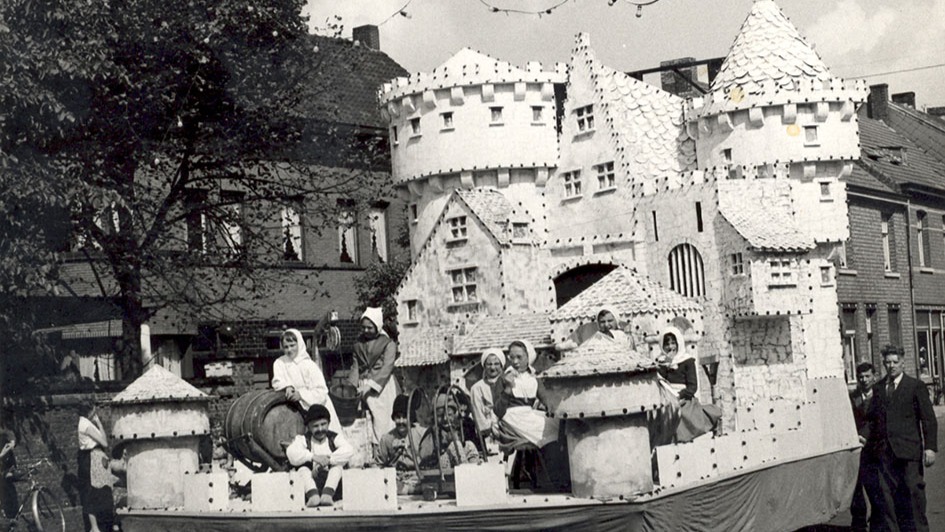
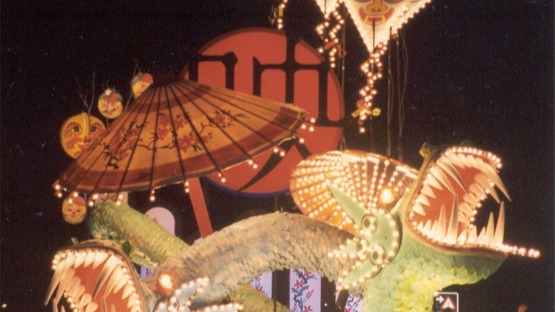
After World War II, the parade gained significant momentum. The use of tens of thousands of tiny light bulbs gave the illuminated procession a fairytale-like quality. Driven by a growing yet healthy rivalry among participants, the artistic quality of the floats reached an exceptionally high standard. Depictions became grander and more artistic, while lighting techniques became more modern and brilliant. Electromechanical motion technologies were already being employed as early as the 1950s. Today, PLCs, home automation systems, electronics, and computer-controlled hydraulics are integral to our parade. Motion technologies are applied functionally; movement is never used merely for the sake of movement (after all, our parade is not a mobile theme park or a standard carnival procession).
The small (traditional) light bulb has also made a comeback, taking its place in our Light Parade alongside dozens of other equally valid technologies. This is what makes the Mol Centrum Rozenberg Light Parade so unique: the constant quest for innovation and the knowledge that there is always room to make things even more beautiful.
The Mol Centrum – Rozenberg Light Parade is therefore rightly regarded as a prime example of folk art. The perfect harmony between design and lighting is unique, earning the parade widespread international renown.
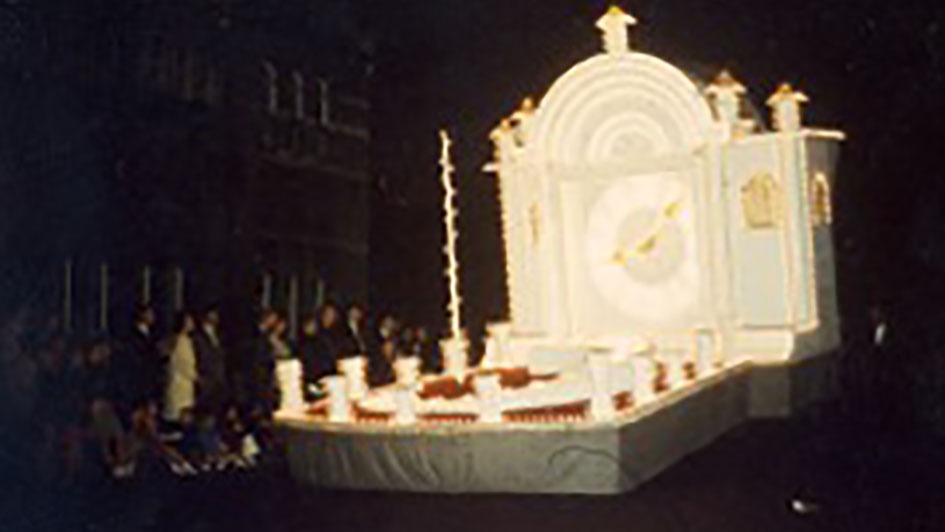
From the very beginning, the torchlight procession was an overwhelming success. Local residents, community groups, and musicians would gather every year for this festive parade of lights.
Torches eventually gave way to hollowed-out beetroots containing tallow candles, which were later replaced by the small paper lanterns familiar from our childhoods. Local young people enthusiastically joined in, devising all sorts of creative costumes in a spirit of friendly rivalry. Neighborhood groups formed and began creating group displays featuring small, illuminated structures lit by candles from within.
The procession gained momentum, growing year by year and becoming widely known. Local weekly newspapers would announce the upcoming attractions in advance, and visitor numbers rose steadily. Every September, people traveled from far and wide to the Rozenberg to witness this breathtaking parade of lights.